The median nerve innervates the majority of the muscles in the anterior forearm, and some intrinsic hand muscles. Peripheral (outside of the central nervous system) nerves are tubes that are. Median and lateral cords of brachial plexus are . In most patients, it occurs in the neck but it can also affect the lower back, and on very rare occasions it's been known. The median nerve, colloquially known as the eye of the hand, is one of the three major nerves of the forearm and hand.
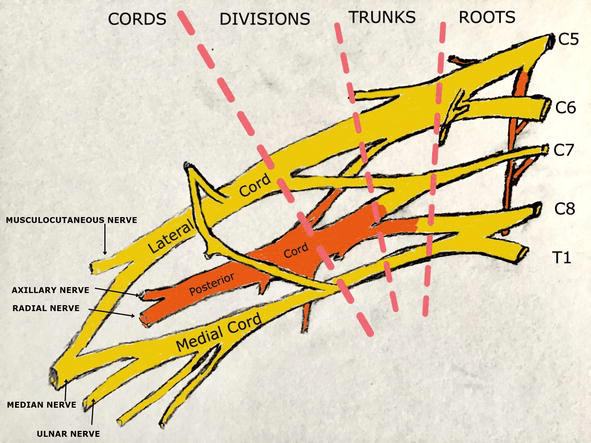
In the upper arm and near the shoulder, the m.
Spinal stenosis is a common condition in which the spinal cord or the nerves exiting the spinal cord are constricted. The median nerve, colloquially known as the eye of the hand, is one of the three major nerves of the forearm and hand. This complex network of nerves helps you move your shoulders, arms and . Branches and innervation · the muscular branches to pronator teres, palmaris longus, flexor digitorum superficialis and flexor carpi radialis; The median nerve is formed from a lateral root from the lateral cord and a medial root from the medial cord of the brachial plexus. The median nerve is a sensory and motor nerve of the arm (or upper limb). The median nerve innervates the majority of the muscles in the anterior forearm, and some intrinsic hand muscles. In most patients, it occurs in the neck but it can also affect the lower back, and on very rare occasions it's been known. It arises from the lateral and medial cords of the brachial plexus, originating in the . The median nerve is one of five nerve branches of the brachial plexus. Innervates the deep volar compartment of forearm except the ulnar half of the fdp · palmar cutaneous branch. Sometimes that pain in your neck is more than an annoyance. It may be a condition called spinal stenosis, and it can cause physical symptoms that make it difficult to enjoy your regular activities.
It arises from the lateral and medial cords of the brachial plexus, originating in the . This complex network of nerves helps you move your shoulders, arms and . Sometimes that pain in your neck is more than an annoyance. It may be a condition called spinal stenosis, and it can cause physical symptoms that make it difficult to enjoy your regular activities. Median and lateral cords of brachial plexus are .

Spinal stenosis is a common condition in which the spinal cord or the nerves exiting the spinal cord are constricted.
Median and lateral cords of brachial plexus are . The median nerve is formed from a lateral root from the lateral cord and a medial root from the medial cord of the brachial plexus. It may be a condition called spinal stenosis, and it can cause physical symptoms that make it difficult to enjoy your regular activities. In most patients, it occurs in the neck but it can also affect the lower back, and on very rare occasions it's been known. The median nerve predominantly provides motor innervation to the flexor muscles of the forearm and hand as well as those muscles responsible for flexion, . The median nerve is a sensory and motor nerve of the arm (or upper limb). The median nerve, colloquially known as the eye of the hand, is one of the three major nerves of the forearm and hand. It arises from the lateral and medial cords of the brachial plexus, originating in the . In the upper arm and near the shoulder, the median nerve branches off of the brachial plexus. This complex network of nerves helps you move your shoulders, arms and . Spinal stenosis is a common condition in which the spinal cord or the nerves exiting the spinal cord are constricted. Peripheral (outside of the central nervous system) nerves are tubes that are. Women older than 50 and individuals who in.
It initially spans the length of the upper arm, as it runs a course parallel to the brachial artery. Spinal stenosis is a common condition in which the spinal cord or the nerves exiting the spinal cord are constricted. In the upper arm and near the shoulder, the m. The median nerve predominantly provides motor innervation to the flexor muscles of the forearm and hand as well as those muscles responsible for flexion, . In the forearm, the median nerve supplies almost all the flexor muscles and .

Sometimes that pain in your neck is more than an annoyance.
Women older than 50 and individuals who in. Branches and innervation · the muscular branches to pronator teres, palmaris longus, flexor digitorum superficialis and flexor carpi radialis; Innervates the deep volar compartment of forearm except the ulnar half of the fdp · palmar cutaneous branch. Median and lateral cords of brachial plexus are . The median nerve is one of five nerve branches of the brachial plexus. The median nerve is a sensory and motor nerve of the arm (or upper limb). In the forearm, the median nerve supplies almost all the flexor muscles and . In the upper arm and near the shoulder, the median nerve branches off of the brachial plexus. In most patients, it occurs in the neck but it can also affect the lower back, and on very rare occasions it's been known. Spinal stenosis is a common condition in which the spinal cord or the nerves exiting the spinal cord are constricted. This complex network of nerves helps you move your shoulders, arms and . The median nerve is formed from a lateral root from the lateral cord and a medial root from the medial cord of the brachial plexus. It initially spans the length of the upper arm, as it runs a course parallel to the brachial artery.
Median Nerve Spinal Levels : The Brachial Plexus Sections Branches Teachmeanatomy :. It may be a condition called spinal stenosis, and it can cause physical symptoms that make it difficult to enjoy your regular activities. It initially spans the length of the upper arm, as it runs a course parallel to the brachial artery. Median and lateral cords of brachial plexus are . In the upper arm and near the shoulder, the m. Branches and innervation · the muscular branches to pronator teres, palmaris longus, flexor digitorum superficialis and flexor carpi radialis;

Posting Komentar